

A roof coating can add years to an aging commercial roof without a full tear-off. Hill Country Roofers applies coating systems to flat and low-slope roofs on warehouses, retail centers, offices, and apartment communities in Canyon Lake and across the Texas Hill Country. A free roof survey tells you whether your roof qualifies and what it needs first.
The summer sun is hard on commercial roofs. Over time, the surface cracks, fades, and starts to let water in at seams and flashings. A coating renews that weathering surface, seals small cracks, and reflects heat. For the right roof, that is a smart way to extend its life and put off a large replacement bill.
The key words are “the right roof.” A coating works best on a low-slope roof that is still dry underneath. If the insulation is wet or the membrane is coming loose, coating over it only hides the problem. We tell you which situation you are in before you spend anything.

A popular, cost-effective choice with strong UV resistance and good reflectivity. Best on roofs that drain well. Acrylic does not handle standing water as well as silicone.

A good fit for flat roofs where water can sit after rain. Silicone resists ponding water and UV exposure. It is hard to recoat with anything other than silicone later.

A tougher surface for roofs that see foot traffic around rooftop units and equipment, or that need better impact resistance. We confirm which type suits your roof.

An aging metal roof can often be cleaned, rust-treated, sealed at laps and fasteners, and coated. This can stop leaks and protect the panels. For a metal roof that is past saving, see our metal roofing services.

Before any coating goes on, we check whether water is trapped in the roof. Wet areas are marked and repaired first.
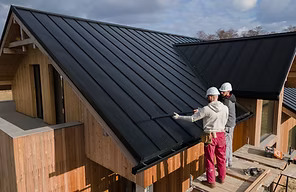
Seams, flashing, drains, and penetrations are repaired and reinforced so the coating has a sound surface to bond to. See our roof leak detection and repair services.
Acrylic | Silicone | Polyurethane | |
Best for | Roofs that drain well; cost-conscious projects | Flat roofs with ponding water | Roofs with foot traffic or impact concerns |
Standing water | Weaker | Strong | Depends on the product |
Recoating later | Easier to recoat | Hard to recoat with anything but silicone | Depends on the product |
UV stability | High | High | Varies; aliphatic types hold up better than aromatic |
Watch out for | Ponding areas | Dirt pickup and future recoat limits | Product choice matters; ask for details |
the roof is low-slope, still dry underneath, and the membrane is sound apart from surface wear, small cracks, or minor leaks. Coating is often less disruptive and costs less than a tear-off.
insulation is wet, the membrane is splitting or loose, the deck is damaged, or the roof has repeat leaks across large areas. Hail damage also weakens a roof in ways a coating will not fix. In those cases, replacement is the honest answer. See our roof replacement services.
Standing water points to silicone. Good drainage and a tight budget point to acrylic. Heavy foot traffic points to polyurethane.
Every project gets a written price after a roof survey. These are the main things that move it:
Ask each contractor for a line-by-line bid, including coating type and thickness, so offers are easy to compare.
we inspect the roof, check for trapped water, and take photos of problem areas.
coating type, thickness, repairs, and timeline in plain language.
wet or failed areas are replaced, seams and flashing are reinforced, and the roof is cleaned and primed where needed.
applied in the weather conditions the product requires, with work planned around your business hours.
we review the finished roof with you and go over care and yearly inspections
A coating seals the surface. If water is already trapped under it, the coating seals that water in. As the sun heats the roof, trapped moisture can cause blisters, and wet insulation keeps losing its value. That is why we check for moisture before coating a roof of this age.
Wet insulation gets cut out and replaced, then the roof is prepped and coated. A coating warranty from a manufacturer often depends on the roof being verified dry first, so this step protects both the roof and the paperwork.
If your roof already leaks, see our roof leak detection and repair page.
We work with property managers, landlords, and business owners on warehouses, retail centers, offices, and apartment communities with TPO, modified bitumen, and metal roofs that have years left in them. Each owner gets the same careful survey and the same clear bid.
It depends on the roof, the coating type, how thick it is applied, and how well the roof is maintained. Ask for details in your written bid. A coating extends the life of the current roof; it does not make a failing roof new.
No. Low-slope roofs that are still dry underneath are the best candidates. Wet insulation, loose membrane, or a damaged deck means replacement is the better choice.
Often, since there is no tear-off. But it only makes sense if the roof qualifies. We will tell you if replacement is the smarter spend.
It can seal small cracks and minor leaks. Larger leaks, failed seams, or wet insulation need repair first. We find the source before we coat.
A reflective coating can help reduce heat gain from the sun. How much depends on the building, insulation, and roof color.
Often, yes. The roof is cleaned, rust is treated, laps and fasteners are sealed, then the coating is applied. If the panels are badly worn, replacement may be better.
Silicone handles standing water well but is hard to recoat with other products. Acrylic costs less and is easier to recoat but does not like ponding. We match the coating to your roof.
Coating is usually less disruptive than a tear-off because the old roof stays in place. Work is planned around your hours, and large jobs can be done in phases.
Hill Country Roofers is ready to help you decide whether a coating is right for your roof. Ask for a free roof survey and a written bid. Call (830) 488-7978 or email lissette@hillcountryroofers.net.